New EU packaging regulation – Possibilities and challenges for packaging waste
Europe | The European Union’s new Packaging and Packaging Waste Regulation (PPWR) marks a historic shift toward a unified, circular economy. Yet, as the EU prioritizes reuse over recycling, questions arise about whether this approach could undermine proven systems for inherently circular materials like aluminium.
Since 1994, the European Union (EU) has been governed by the Packaging and Packaging Waste Directive, a cornerstone law that set essential requirements for packaging design and waste management in the region. For nearly three decades, this directive has provided the framework for reducing packaging waste and promoting recycling. However, as sustainability ambitions intensified under the European Green Deal and Circular Economy Action Plan, the limitations of the directive became increasingly apparent. Divergent national rules around extended producer responsibility and recycling labels created inefficiencies and hindered progress toward a unified approach.
In 2022, the European Commission launched a comprehensive redesign of the PPWD that aimed to better align with the Green Deal and Circular Economy goals. Culminating in a final adoption of Regulation (EU) 2025/40 – or more colloquially named as the PPWR –in December 2024, the EU is now at a pivotal moment in packaging sustainability history, but whether it achieves environmental history depends on integrating complementarity between reuse and recycling systems.
The PPWR – a solution with questions still to answer
Packaging has been a steadily-increasing source of waste for the EU. In 2009, the EU generated 66 million tonnes of packaging. By 2021, this had soared to 84 million tonnes, an increase of 30% in just twelve years. That same year, each European generated over 188 kilograms of packaging waste – a figure that is predicted to jump to 209 kilograms in 2030 if no additional measures are put in place. Packaging waste contributes to resource depletion, greenhouse gas emissions, and pollution, while imposing immeasurable costs on municipalities, producers, and ordinary citizens.
The PPWR took notice of the dire nature of this problem. The regulation sets ambitious benchmarks aimed at the year 2040: waste reduction of 15%; full recyclability of packaging by 2030; recycled content quotas for plastic packaging; standardized rules on over-packaging, labeling, and thickness; and most notably for the beverage world, the full adoption of deposit return schemes, or DRS, for beverage containers by 2029. These measures aim to create a packaging ecosystem that minimizes waste and maximizes efficiency. However, while the PPWR represents a strong cultural and political movement towards commitment to sustainability, its implementation raises complex questions, particularly regarding the regulation’s strong emphasis on reuse compared to recycling.
Reuse targets
The PPWR sets binding reuse targets that certain sectors, including beverage and transit packaging, must implement by 2030. Although Member States are permitted to grant temporary exemptions from these targets, the current wording of the regulation frames them as general exemptions from all reuse targets. The application of broad criteria across all economic operators and packaging materials creates the possibility of disproportionate impacts upon specific sectors, despite high recycling performances.
For example, aluminium packaging containers continuously meet ambitious recycling targets, yet under the PPWR, they could fail to earn an exemption from reuse obligations. By prioritizing reuse over recycling without accounting for material-specific circularity, the regulation could inadvertently penalize industries like the beverage industry, who have invested heavily in efficient recycling systems.
Implementing reuse targets will likely undermine the success of a recycling DRS and lead to unforeseen environmental consequences namely for the aluminium beverage can which has a lifecycle that few other materials can match.
Optimum circularity
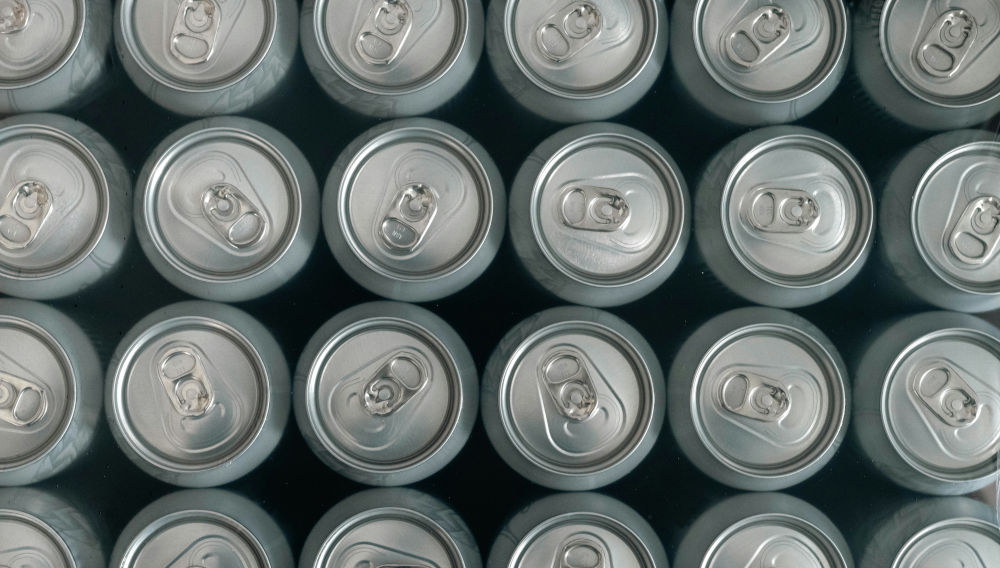
Aluminium has an unsurpassed sorting, reprocessing, and remelting efficiency rate of 90% once collected from consumers – as compared to PET at 66%. High recycling rates and a closed loop circular nature set aluminium cans apart from other sustainable packaging. Research by the International Aluminium Institute (IAI) has shown that of typical beverage container materials, aluminium cans best support the circular economy through their properties of infinite recyclability.
In 2022, the overall recycling rate for aluminium cans in the EU, UK, Switzerland, Norway, and Iceland was 75% (data according to Metal Packaging Europe, an industry body of Europe’s rigid metal packaging industry). The total amount of aluminium recycled from cans hit a record level of 580,000 tonnes, a 1.7% increased from 2021, representing a total greenhouse gas (GHG) emissions savings of 5.4 million tonnes of CO2eq (equivalent to the annual amount of GHG produced by a European city of more than half a million inhabitants like Oslo or Genoa).
Over 70% of the material used in aluminium cans is recycled into new cans or other products – requiring 95% less energy to process than new aluminium made from raw natural resources. All told, an aluminium can is used by a consumer, recycled, and manufactured back into another can and placed back on the shelf within 60 days. This optimum circularity is driven by the effective recycling systems put in place in recent decades, such as the one in Germany that has led to a 90% recycling rate.
In short, aluminium cans are already furthering a circular economy through their inherent sustainability and high recycling raters. They are not, however, reusable. Rather than force companies who have achieved – and are continuing to achieve – success through recycling systems to pivot, the PPWR should focus on packaging materials that are able and prepared to move to a reuse system.
Moving forward
There is ample opportunity for progress in the circular economy, but that hinges on implementing policies that are both effective and equitable. While the PPWR’s ambitious targets reflect a clear commitment to reducing waste and increasing resource efficiency, its ultimate success will hinge on the EU embracing both reuse and recycling as complementary strategies rather than competing priorities.
Packaging companies are eager to engage with the EU. Many are aligning their operations with EU sustainability goals by lightweighting, increasing recycled content, and engaging advanced sorting technologies. Others already have well-functioning recycling systems in place that are furthering the ultimate goals of the PPWR.
Together, recycling and reuse can form the foundation of a circular economy operating at its full potential for generations to come.
Sustainability is not a zero-sum game. By valuing diversity in circular solutions, the EU can lead the rest of the world in creating a packaging waste system that works for the people, our planet, and for prosperity.
Keywords
beverage packaging Europe cans international beverage industry
Authors
Sandrine Duquerroy-Delesalle
Source
BRAUWELT International 2026
Companies
- Crown Holdings Inc., Philadelphia, United States