
Obituary Lodewijk Swinkels
The free-spirited Dutch brewer died on 31 March, aged 56.
How he loved those little vine-grown buds. Rubbing them between his fingers he liked to imagine how their aromas would add to his beer. With so many varieties of hops available, he could conjure up a nearly endless number of beer recipes. His love of hops was not an idiosyncratic folly. Every brewer worth his mettle shared it. But he knew all about it. From how it is uncovered and cut in spring, how its shoots are trained clockwise around the previously attached wire. Walking across hop gardens all over the world in his hiking boots, his eyes would trace the plants reaching upwards, higher and higher, always following the movement of the sun, until they would start to bloom and develop cones, making for a bountiful harvest at the end of summer. Ah, the beauty of nature.
That he would become a brewer was not a given. Although he had been born into the Swinkels family as a member of the seventh generation that is running the second largest brewing company in the Netherlands (now called Royal Swinkels), he was a bit of a raver in his youth. Well, he was young, witty, sociable, and those were the days. Besides, his family could be a bit cloying. In the Lieshout village, home to the Swinkels’ Bavaria brewery, uncles lived in houses next to the premises, cousins everywhere. He liked to joke that by the brewery’s stakeholder count he had at least 244 relatives. In his time, important business decisions were still taken at auntie Corrie’s dining table.
Getting away from it all, he decided to attend the university of Weihenstephan. But he soon discovered that swotting and rigorous studies were not for him. Being a free thinker, he preferred a more creative approach to brewing. He landed his first job as brewer in Utrecht, where he managed to cause a minor scandal simply by launching a hazy wheat beer, which the authorities thought was an infected beer. They threatened to close the place down. Good heavens. It was just a different style of beer. Before craft brewing took off, all Dutch beers had to be either a pilsner … or a pilsner … and never hazy. Completely unintentional he, a Swinkels, had just become the industry’s first rule-breaker.
At the behest of his family, he joined the La Trappe brewery of the Koningshoeven abbey in Berkel-Enschot, Dutch Brabant, in 1999, one of only seven Trappist breweries then. The relationship between the abbey and the Swinkels, established that year, was unique. The Swinkels owned the brewery, ran logistics and distribution, but the monks were the ultimate decision-makers. When he joined La Trappe, the brewery was in a bit of a state. There were various issues. Regardless, he was undeterred and convinced that in time he would solve them. He brought in a new yeast, improved beer quality and made La Trappe profitable again. It did help that Swinkels funded a new brewhouse, shoehorned in alongside the old one to stay within the abbey walls, as required, as well as state-of-the art bottling and kegging lines. It may have helped too that they handled distribution. Because soon his beers received big kudos from discerning beer lovers. He did not care that in beer competitions his beers were easily identifiable, even when tasted blind. So what? They tasted the way they should. And didn’t they win prizes, year after year?
He much enjoyed the ambience of the abbey, its serenity, silence and the Trappist’s rules. It suited his creativity to devote himself to details, tweaking processes and recipes, actively working with hop farmers to achieve the best results. Even when the monks decided that eight regular beers were enough, this was fine by him. He didn’t see rules as constraints but as conducive to new ways of thinking. When he was tasked with brewing a beer for the 125th anniversary of the abbey in 2009, to be named La Trappe Isid’or after Brother Isidorus Laaber, the first monk to brew beer at the abbey in 1884, he did not take the task lightly. After all, the beer was to honour a remarkable brewmaster, whose job he now held. After much reflexion, he decided on a beer which should have a harmonious balance between complexity and simplicity, reflecting its craftsmanship. The same year, again with a nod to history and tradition, he got La Trappe’s oak barrel programme off the ground. Exciting times. Switching between both used and new oak barrels in which to mature La Trappe’s Quadrupel beer, opened new avenues into a variety of different flavours. He was so proud of this achievement that he allowed himself to be photographed for publicity. He wasn’t one to hug the limelight. He was far too modest for that, and perhaps too aware of the monks’ reclusiveness, which had rubbed off on him. And yet, there he was, sitting on one of the barrels, wearing a red shirt and smiling happily.
In 2018, the fates interfered and he had to jump the La Trappe ship. Upon his departure for Canada, he let his team know that the brewery had always been a special place for him, but that he was leaving with a peace of mind because things were on the right track. Moving across the Atlantic to be a part of Brunswick Bierworks in Toronto was an adventure: another country, another way of doing business. Brunswick was unlike anything he had ever seen or worked for before. To some it was just another contract operation. To him it presented an ideal opportunity: brewing a wide variety of beers together with brewers who were equally fussy and particular about their beers. At the time, Brunswick was partnered with 21 breweries and produced more than 60 different brands. In the official press release he was quoted as saying that he was drawn to the passion there - as he was drawn to the beers. “To be able to brew with some of the most iconic and innovative brewers in a brand new, world-class facility is something you dream about,” he said.
He certainly meant it. What he had not bargained for was the North American tough-nosed business culture, its relentless focus on performance, results, accountability and efficiency. He realised he didn’t have a mind for numbers, for all those spread-sheets, metrics, KPIs, and rapid, data-backed decisions. He was an Old World brewer, who liked to brew beer, ideally undisturbed by management breathing down his neck. He decided it was time for him to bow out, gradually and gracefully.
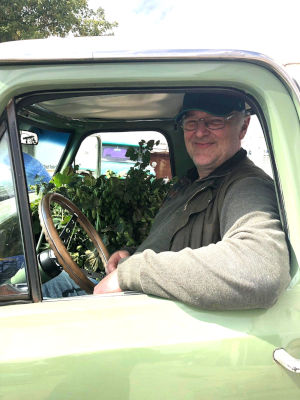
Even after he had officially retired, he never lost touch with other brewers, always helping out and generously giving advice. He decided to spend his free time exploring the great outdoors around Prince Edward County, where he had bought a plot of land, together with his wife Margit and their dog. Always an avid gardener, he enjoyed pottering about his property. He also took up a new hobby: fishing. On the internet he posted a photograph of a car towing a boat, as if to say: “gone fishing”. During harvest time he liked to help out on his friend’s hop farm. It wasn’t the Hallertau, it wasn’t Yakima. But he could smell the hops alright. Imagine all the wonderful beers.
Keywords
brewers obituaries international brewing industry
Authors
Ina Verstl
Source
BRAUWELT International 2026