
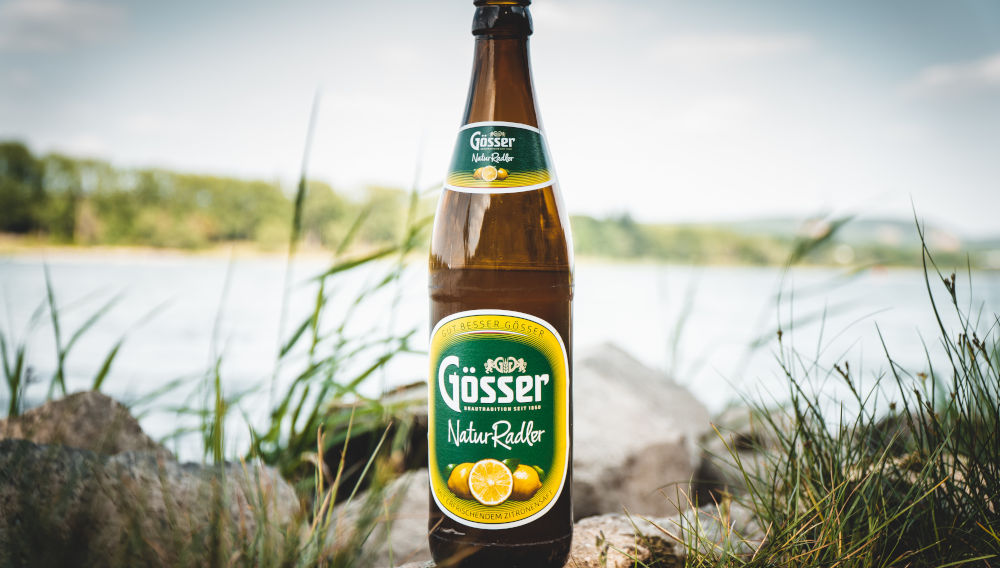
Peddling Radler to pedaling customers
Magpie & Marten: Column | Getting back to our most recent discussion regarding a new type of Radler emerging in citrus-growing countries (see BRAUWELT International 2 2026, pp. 103–104), we will now broaden our scope both in space and time to consider other trends and traditions, both from inside and outside of Europe.
Radler if you, our esteemed readers, will recall is a finished beer blended with a citrus-flavored soft drink. It was invented out of necessity for and likewise named after cyclists visiting a famous Munich-area beer garden. This beverage emerged as a result of and in reaction to local conditions, as every beverage has since their invention.
I think nearly everyone in the beverage industry in German-speaking Europe must know the following little anecdote about the cyclist on the Autobahn. It can be quite drawn out and dramatic in the telling, but we’ll curtail it to its bare bones here: Two policemen driving down the Autobahn see a lone cyclist in the distance riding on the side of the road, and cyclists are, for obvious reasons, prohibited from traveling on such a major thoroughfare. As their cruiser approaches, the policemen notice the cyclist is weaving back and forth on the shoulder of the road as if he’s had too much to drink. Coming ever nearer, they see that he’s riding a tandem, a bicycle built for two. His face is deathly pale but his hair, jet black. Moreover, he’s dressed all in black with a long, bat-like cape, and he also seems unnaturally tall and thin. The puzzled policemen pull up beside him and are shocked to notice that below his befanged mouth, his chin is red. They stop him and ask, “Sir! You’re not allowed to ride your bicycle here! Have you been drinking?” He gazes at them with hollow, penetrating, bloodshot eyes, and answers slurring his words, “Only two Radler!”
Give the people what they want
Recently, everything seems to be shifting towards the exotic, citrusy and fruity. Canned cocktails have gained in popularity; however, wellness trends now tend toward no added sugar and beverages with little or no alcohol. The solution we discussed last time was found in a niche within our modern beverage landscape through incorporating and thus fermenting whole fruit citrus pellets in the beer production process. Those doing so have dubbed the resultant beverage Whole Citrus Radler. The local consumers of Whole Citrus Radler already live in regions where citrus is ubiquitous and, thus, the beverage only seems natural.
Enterprising brewers and publicans have always targeted a broader audience by adding fruit and/or sugar, especially for those not so fond of the flavor of conventional beer. Nevertheless, the silly witticism about the vampire on the Autobahn reminds us that ancient European traditions can be revisited and recombined to yield new perspectives. Similarly, scientist Ivan Pavlov astutely observed, “If you want a new idea, read an old book.”
Natural, healthy, regional and seasonal
Fruit and herbs have long been used throughout history to improve the sensory profile and stability of beer. From one end of the Continent to the other, down to Southern Mesopotamia and Egypt over many millennia, fruit in beer has been more the rule than an exception. Hops are one of many herbs that has been employed in beer as well. A living example of a traditional fruit beer is made with Schaerbeek cherries. This variety of cherries contains a large pit and is bitter and very acidic, producing a light-colored juice. In Belgium, these cherries are not eaten like their more rotund, sweeter cousins but are harvested for use in the production of kriek. They contribute yeast and a bit of sugar plus polyphenols from their skins and pits, which aid in the preservation of this wonderful and venerable beer style. Unfortunately, kriek has been tampered with by some modern producers to become artificially sweetened in order to attract consumers who don’t particularly like the flavor of beer.
The beer/fruit-based beverages in Europe are often associated with a certain time of year. In some regions of Germany, an Altbierbowle is particularly popular “between the years,” i.e., between Christmas and New Year’s Day. Altbier and fruit, usually rum-soaked strawberries, are combined with the famous beer from Dusseldorf.
The ancient pagan tradition of the Hexenfeuer (Witches’ Fire), on the eve of May Day, when bonfires are lit, known primarily now as Walpurgisnacht, was celebrated throughout the old Celtic and Germanic regions to mark the beginning of the light half of the year. As with most pagan holidays, it was coopted by the Church and is still observed as a saint’s day. An effervescent Finnish beverage associated with this holiday, called sima, is made from water, honey, lemons and oranges. Raisins are added during fermentation to observe how well the two to three-day fermentation is progressing, since the raisins float on the bubbles rising from the mixture. Sima is often served with Munkki (Finnish donuts) and is low enough in alcohol that it is enjoyed by everyone at the beginning of summer, especially on Vappu (May Day).
Frequently in Europe, regional and seasonal variations on cider, perry, beer and wine have all evolved alongside one another, and sometimes they have been blended. In apple and pear-growing regions, these fruits are not only used to create cider or perry, but the juice can be added to wort or green beer where it undergoes fermentation. The couple who operate the Lindheim Frukt og Ølkompani and who are acquaintances of the authors, live in a region known as the Fruktbygda or “Fruit Village” of Norway, where they produce 150,000 liters of beer, apple juice and apple cider annually at their idyllic farmhouse brewery. Oak barrel maturation brings a mélange of flavor nuances to the fore. They have employed the fruit harvested on the farm in their range of beers – along with the microbes on the fruit skins –to great acclaim.
Historically fruity
Broadening our scope even more, beer around the world has even been made with apricots, peaches, cherries, watermelon, in addition to more exotic fruit such as papaya, breadfruit and various types of citrus. These beers, up until recently, were usually available only in their respective geographical areas. Unavailable now (since they were brewed thousands of years in the past) are the beers of the Ancient Near East, which over many millennia were brewed with grapes or dates, not only for flavor, but to aid in fermentation by contributing Angärzucker (simple sugars that jump start fermentation) and microbes to the mix. Ancient beers were all-natural, low in alcohol and nutrient-rich – what’s not to like?
Fruit and beer have had a fraught relationship, often expressed as the duality of ‘the grain and the grape.’ Mixing the two is frowned upon, at least in some circles; however, it shouldn’t be. Since the dawn of brewing, fruit has been a contributor of fermentable sugar, natural preservatives, healthy ingredients and wild microbes, particularly yeast. The current trend of incorporating fruit in beer production is not novel; only the methods and processes are. Ultimately, it is true that there is nothing new under the sun (even in sunny climes), but as we mentioned in our last installment, we look forward to seeing where this freshly revived ride will take us.
We’d like to hear what you think! Write to us with your thoughts, observations and/or opinions at .
Keywords
beer styles beers of the world beer culture beer-based beverages mixed beverages low alcohol
Authors
Christopher McGreger, Nancy McGreger
Source
BRAUWELT International 2026