BrewingScience issue January/February 2026 out now
Nuremberg | In the latest BrewingScience issue 1/2 2026, the authors investigate different aeration strategies for the production of kombucha; determine the temperature optimum of cereal beta-amylase and validate a low-evaporation retrofit for industrial wort boiling. The brief article abstracts below provide a good initial overview of the content.
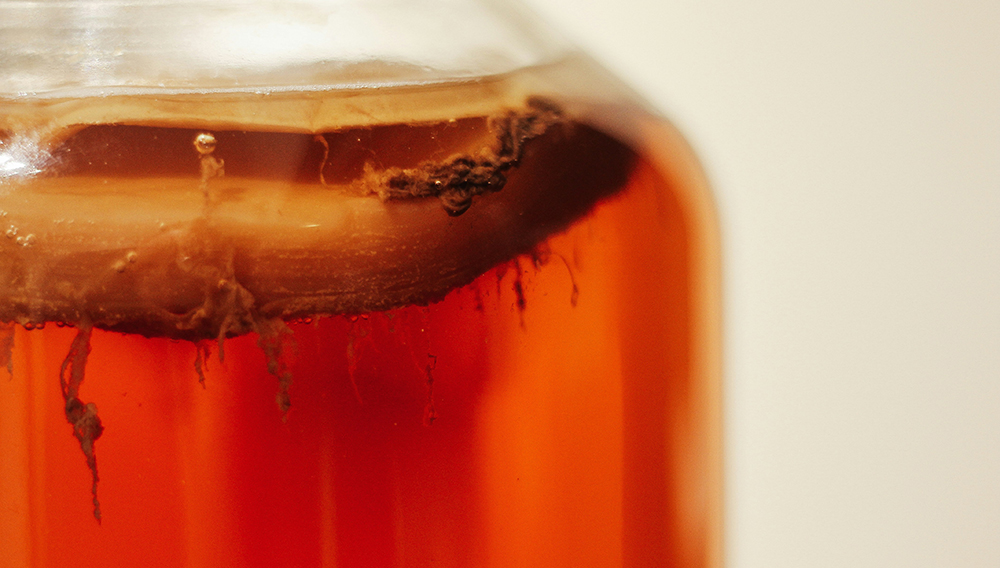
Investigation of different aeration strategies for the production of kombucha with defined co-cultures (M. Ludszuweit, L. Bender, G. Mehta, M. Hageböck, B. Gibson, M. Senz)
Kombucha fermentation is a complex process influenced by many different process parameters and the dynamics of the microorganisms present. Since no universally established standards exist for large-scale production of kombucha, manufacturers still need to acquire the knowledge to establish controllable and reproducible processes.
The aim of this study was to investigate the extent to which the kombucha fermentation process can be influenced by varying the oxygenation regime and the initial pH value. For this purpose, co-culture fermentations with the yeast Zygosaccharomyces bailii and the acetic acid bacterium Komagataeibacter hansenii were carried out under defi ned conditions, varying the type and intensity of aeration using various fixed aeration rates and controlled oxygen saturations. The pH values were varied in ranges between 4.1 and 7.5. The fermentations were comprehensively characterized via online and offline analytics, so that both the processes and the products could be chemically, microbiologically, and sensorially evaluated over time. By splitting the process into a sufficiently long anaerobic phase of 4 days followed by an active aeration phase at 0.1 vvm for three to four days, a sufficient oxygen supply was achieved under the given conditions to adequately convert the ethanol produced by the yeast into acetic acid by the bacteria. Sensory properties of the products were not negatively affected by oxidation reactions.
Compared to reference processes conducted under traditional, static fermentation conditions, a process acceleration was achieved with equivalent sensory quality but significantly reduced alcohol concentrations (<0.08 %vol vs. 0.47 – 0.50 %vol. after 7 days). This study provides an example of how to produce a kombucha product under defi ned and accelerated conditions that includes an aerobic phase, and which can be used as basis for further production process developments.
Determining the temperature optimum of cereal beta-amylase by introduction of the half-life method (J. Schneiderbanger, B. Sacher, T. Becher)
To determine the optimum temperature and the thermostability of enzymes in a standardized, accurate way is an elaborate, often time-consuming task. Knowledge of these characteristics of specific enzymes is of enormous importance for many applications, e.g. for optimizing the mashing regimes in breweries. In addition, due to ever-increasing gelatinization temperatures, cereal varieties (especially barley) are being sought and specifically bred whose starch-degrading enzymes exhibit increased optimal temperatures and temperature stabilities.
A high-throughput method for the standardized determination of an enzyme’s behavior to temperature was needed. Based on enzyme kinetic considerations, the half-life method was developed in which a small number of measuring points can provide a high density of information. This information encompasses the temperature optimum as well as the thermostability of enzymes that degrade high-molecular substrates, which applies to starch-degrading enzymes during mashing. Several cereal malts were analyzed for their beta-amylase temperature optimum and thermostability. In doing so, several prerequisites were established for using the method to obtain valid and comparable results.
Validation of a Low-Evaporation Retrofit for Industrial Wort Boiling: Impact on Wort Quality and Sensory Attributes (L. Grotenhoff, T. Becher)
Wort boiling is one of the most energy‑intensive steps in brewing and is traditionally operated at an evaporation rate of approximately 4 % to ensure sufficient expulsion of DMS. This paper reports the first industrial‑scale evaluation of the retrofittable boiling system BubbleBoil, which generates bubbles via a controlled pressure drop at a ring‑shaped nozzle below the liquid surface, aiming to maintain wort quality at lower evaporation rates.
The retrofitted boiling system delivered higher evaporation efficiency than the reference system at similar evaporation rates, consistent with intensified stripping due to the increased gas-liquid interfacial area. Industrial operation achieved target evaporation rates as low as approximately 1.5–2.0 % while preserving wort quality, with no significant sensory differences compared to a brew produced with a conventional boiling system operating at a 4 % evaporation rate.
Keywords
fermentation brewing science wort boiling BrewingScience publications kombucha
Source
BRAUWELT International 2026
Companies
- Fachverlag Hans Carl GmbH, Nuremberg, Germany